Phone:
08186716030
08062810763
08026898707
Physical address:
Oju Igo Bus stop, Along Ijere road, Mowe, Ogun.
Phone:
08186716030
08062810763
08026898707
Physical address:
Oju Igo Bus stop, Along Ijere road, Mowe, Ogun.
Solar energy is becoming an increasingly popular way for homes and businesses in Nigeria to generate reliable electricity. With abundant sunlight across the country and the rising cost of conventional power sources, solar power offers an opportunity to reduce dependence on the national grid and generators.
If you are completely new to solar energy, understanding the different components, how they work together, and how to choose the right system can seem complicated.
This guide breaks everything down in simple terms.
Solar energy is electricity generated from sunlight.
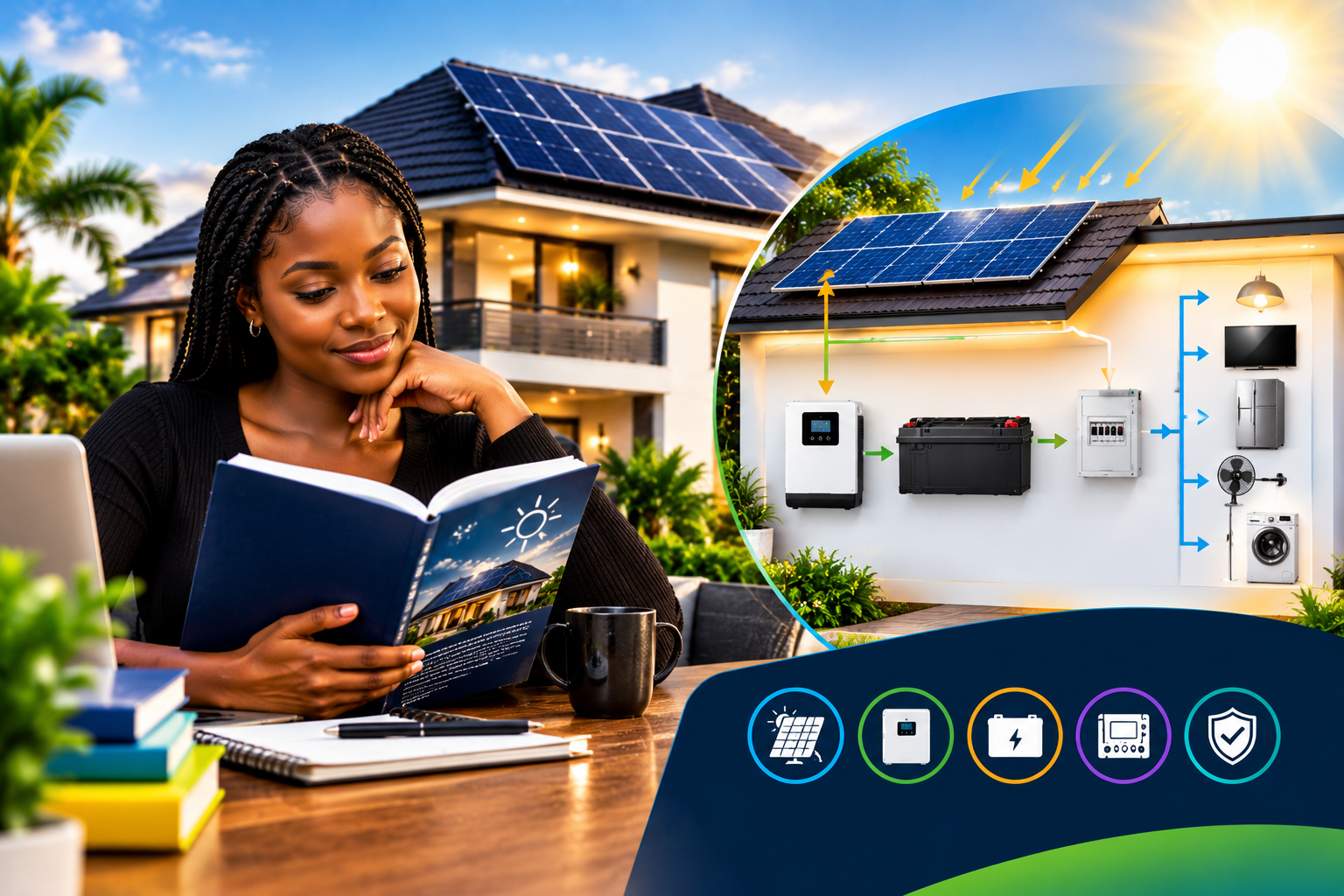
Solar panels capture energy from the sun and convert it into electrical energy. A complete solar power system then uses an inverter, batteries, and other electrical components to make that energy usable for your appliances and equipment.
Depending on the system you install, solar energy can power anything from basic lighting and electronics to larger household and commercial appliances.
Nigeria receives significant sunlight throughout the year, making solar energy a practical option for many locations.
For households and businesses, solar can provide an alternative or backup source of electricity and reduce reliance on generators and grid power.
Some of the potential benefits include:
A solar installation is more than just solar panels.
A properly designed system may contain several components that work together.
Solar panels are the part of the system that captures sunlight.
They contain photovoltaic cells that convert sunlight into direct-current (DC) electricity.
The amount of electricity produced depends on factors such as:
More panels generally mean more potential solar generation, provided the rest of the system is designed to accommodate them.
The electricity generated by solar panels is normally DC electricity, while most household appliances use alternating-current (AC) electricity.
The inverter performs the important job of converting DC electricity into usable AC electricity.
Depending on the type of inverter and system design, it may also manage energy from solar panels, batteries, and the electricity grid.
The inverter is therefore one of the most important components of a solar system.
Solar batteries store electrical energy for later use.
This can be especially useful at night or during periods when the solar panels are not producing enough electricity.
Battery capacity affects how long your stored energy can support your appliances.
Modern systems may use lithium batteries, while some installations use lead-acid battery technologies.
The best option depends on factors such as budget, required backup duration, usage patterns, available space, and system design.
A charge controller regulates the electricity going from the solar panels to the batteries in systems where a separate controller is used.
It helps manage the charging process and protects the battery from inappropriate charging conditions.
Some modern solar inverters already include built-in charge-control functionality.
A safe solar installation also requires appropriate electrical protection and installation accessories.
These may include:
These components help protect the system, equipment, and users when correctly selected and installed.
The process is relatively simple.
Step 1: Sunlight reaches the solar panels.
The photovoltaic cells in the panels convert sunlight into DC electricity.
Step 2: The electricity enters the system.
Depending on the system configuration, electricity can be used immediately, stored in batteries, or directed through the inverter.
Step 3: The inverter converts the electricity.
The inverter converts DC electricity into AC electricity suitable for compatible household or business appliances.
Step 4: Batteries store excess energy.
When the system produces more electricity than is being used, available excess energy can be stored in the batteries.
Step 5: Stored energy can be used later.
When sunlight is unavailable or the grid goes off, the battery can provide electricity according to the system’s capacity and configuration.
This depends entirely on the size and design of the system.
A smaller system may be suitable for essential loads such as:
A larger system can be designed to support heavier loads such as:
However, high-power appliances can require substantially more solar generation, inverter capacity, and battery storage.
This is why your energy requirements should be assessed before purchasing equipment.
One of the most common mistakes beginners make is buying a solar system based only on the size of the inverter or the number of panels.
Your system should instead be designed around your actual energy consumption.
For example, consider:
A professional solar installer can use this information to determine an appropriate system configuration.
These two components serve different purposes.
Solar panels generate electricity.
Solar batteries store electricity.
You can generate plenty of solar power during the day, but without sufficient storage, you may have limited stored energy available at night.
Similarly, having a large battery does not automatically solve your energy needs if your solar panels cannot generate enough electricity to recharge it.
A balanced system requires the panels, inverter, battery, and expected loads to work together.
There is no single price for a solar installation.
The cost can vary considerably depending on:
A small residential backup system will have very different requirements from a large system designed for a business.
Instead of choosing the cheapest package available, focus on getting a system that matches your actual energy requirements and budget.
An undersized system may struggle to power your appliances or provide the expected backup time.
A battery that is too small may run out of stored energy quickly.
Cheap equipment may not always provide the performance, durability, or warranty support you need.
Connecting appliances that exceed the inverter’s capabilities can cause system problems and potentially damage equipment.
Incorrect wiring, inadequate protection, poor positioning, or improper installation can affect system performance and safety.
Solar power involves electrical equipment and energy storage systems that need to be properly designed and installed.
A professional installer can help assess your energy needs, recommend suitable equipment, plan the installation, and configure the system correctly.
At Eammy Power & Lighting System, we focus on providing solar solutions designed around the specific requirements of homes and businesses.
From system planning and equipment selection to installation and maintenance, the goal is to help customers get a solar solution that is practical, reliable, and suited to their energy needs.
Solar energy can be a valuable option if you want to reduce your reliance on generators, improve backup power, or generate more of your own electricity.
However, the right solution depends on your specific circumstances.
Before investing, consider your electricity consumption, budget, essential appliances, desired backup duration, available installation space, and future energy needs.
With the right system design and professional installation, solar energy can become an important part of your home’s or business’s electricity supply.
You don’t need to be a solar expert to get started.
The first step is simply understanding how much power you need and what you want your solar system to accomplish.
Eammy Power & Lighting System can help you explore a solar solution designed around your energy requirements.
Whether you’re looking for residential solar, business power solutions, or reliable backup electricity, choosing the right system starts with proper planning.
Make the switch to smarter energy.
Eammy Power & Lighting System — Powering Your Home. Powering Your Business. Powering Your Future.